North Sikkim
Challenging Difficulty

North Sikkim

Best Time: April to June (Yumthang flower blooms) and October to mid-December (Clear skies & frozen lakes)
Ideal: 3–4 days
Max Altitude: 17,800 ft (Gurudongmar Lake) / 15,300 ft (Zero Point)
Climate: Alpine cold-desert and sub-arctic climate; cool breezy summers and harsh, sub-zero snowy winters.

About North Sikkim

Remote, raw, and fiercely breathtaking, North Sikkim is one of the most dramatic high-altitude wilderness regions in the entire Himalayas. Extending to the borders of the Tibetan Plateau, this rugged expanse transforms from raging river gorges and multi-tiered waterfalls into sub-arctic tundras, snow-capped amphitheaters, and sacred glacial lakes revered across Buddhist and Hindu folklore.

❄️ Sacred Glacial Lakes & Cold Deserts

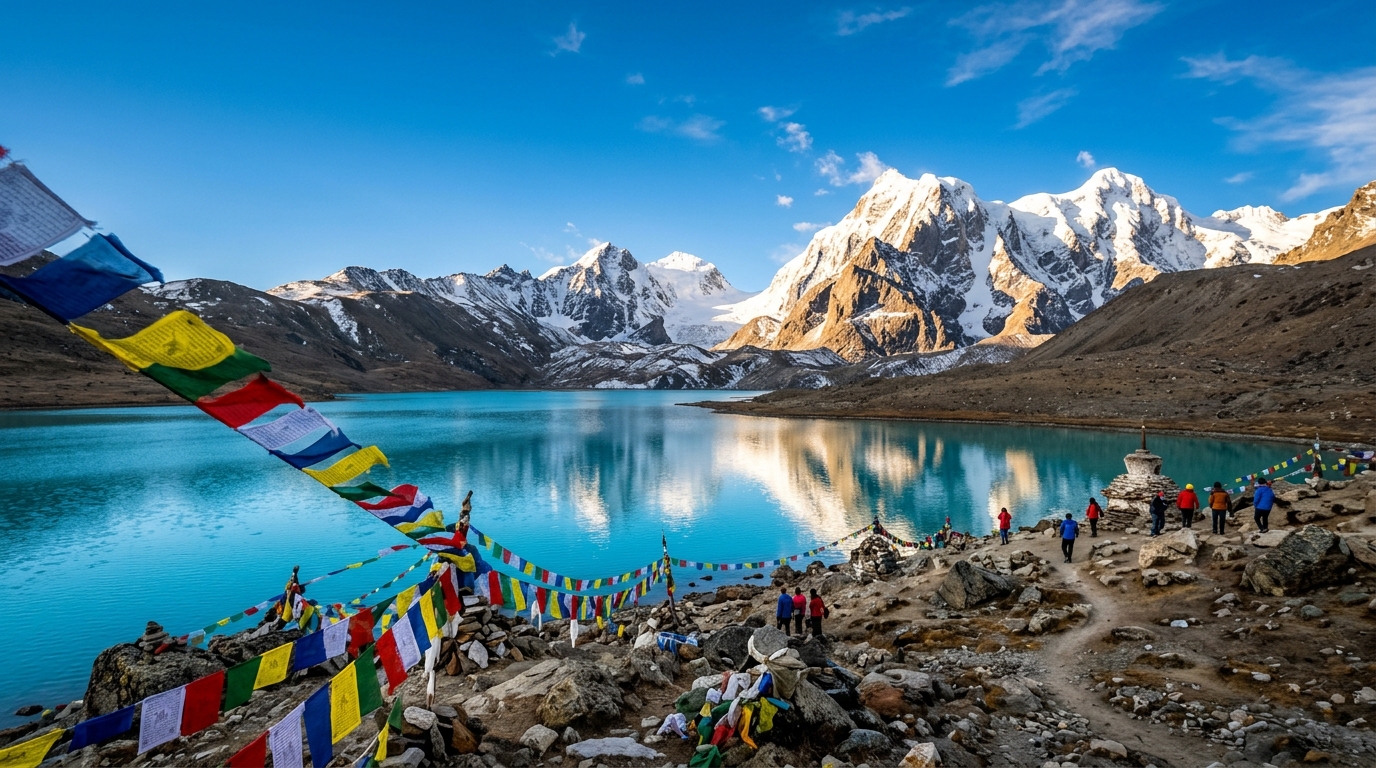
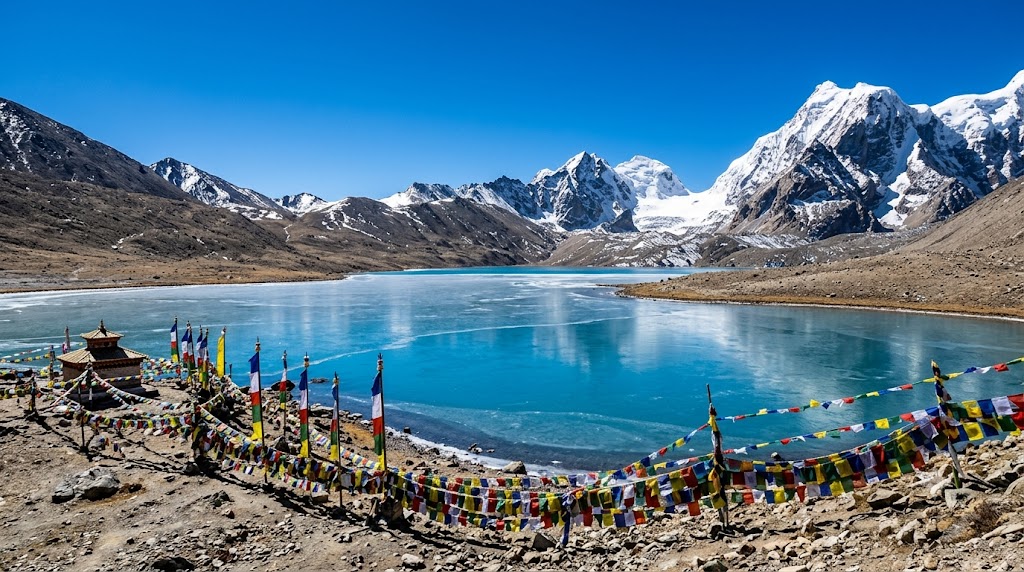
At the pinnacle of any North Sikkim expedition lies Gurudongmar Lake (17,800 ft)—one of the highest freshwater lakes on Earth. Blessed by Guru Padmasambhava and Guru Nanak, a portion of its deep azure waters famously never freezes even in the harshest winter. The journey passes through the desolate, surreal landscapes of Chopta Valley, where wild blue sheep and Tibetan gazelles roam beneath towering snow summits.

🌸 Yumthang: The Valley of Flowers

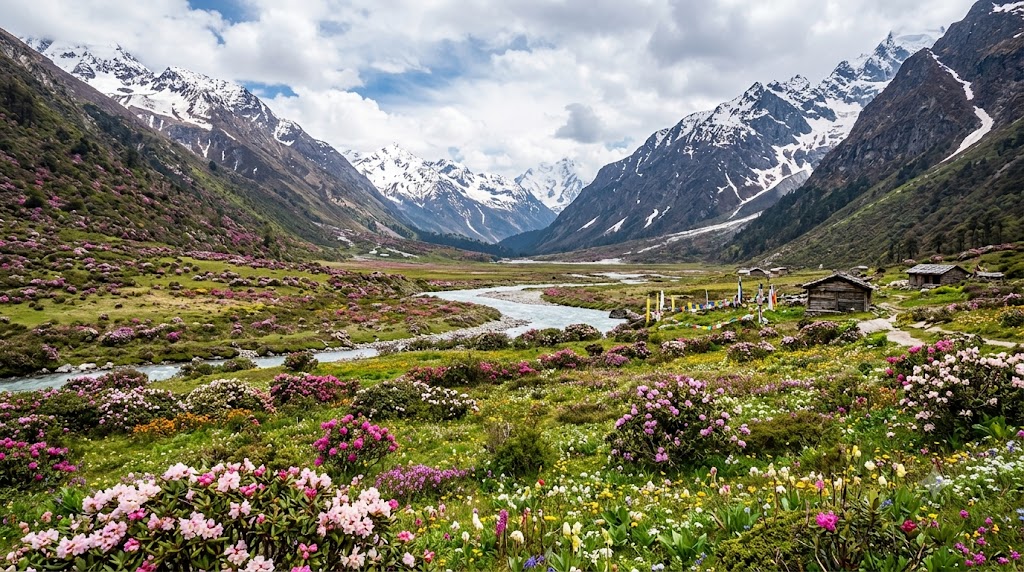
Flanked by the picturesque apple orchard village of Lachung, the Yumthang Valley (11,800 ft) is an alpine meadow carpeted with over 24 varieties of wild rhododendrons, primulas, and irises during springtime. Beyond the meadow lies Zero Point (Yumesamdong at 15,300 ft), where civilian roads end amidst perennial blankets of snow and panoramic glacial vistas.

✨ Essential Highlights of North Sikkim:

  • Gurudongmar Lake: Sacred high-altitude holy lake at 17,800 ft bordered by giant glaciers.

  • Yumthang Valley of Flowers: Spectacular springtime blooms and natural hot sulphur healing springs.

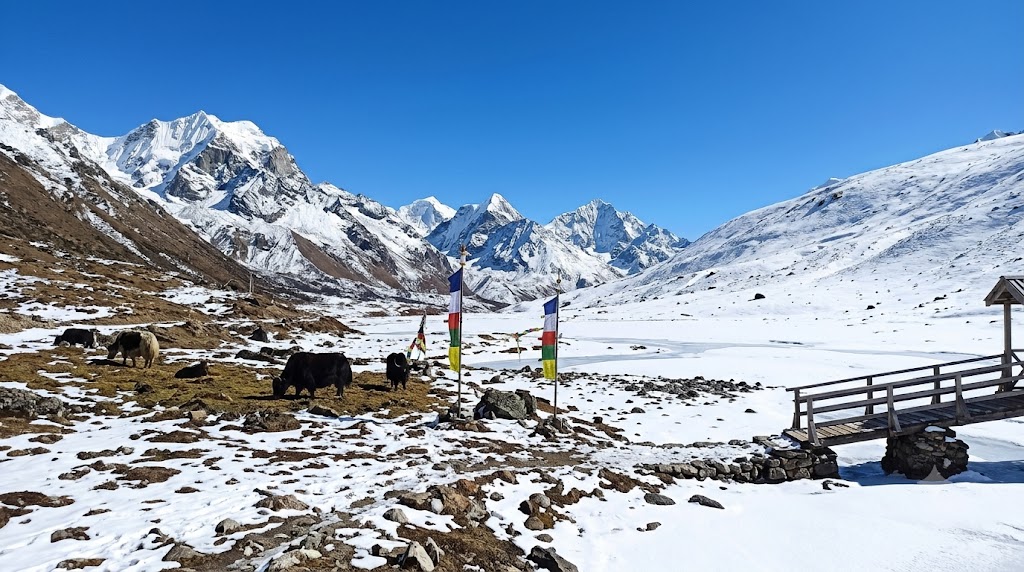
  • Zero Point (Yumesamdong): The edge of civil territory at 15,300 ft with pristine snow all year round.

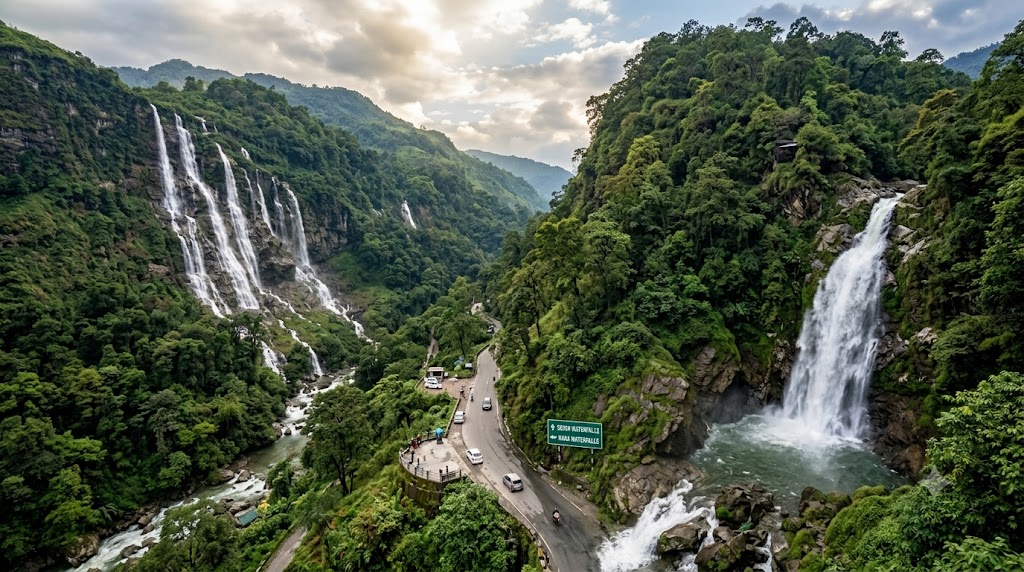
  • Seven Sisters & Naga Falls: Thunderous multi-tiered cascades along the Teesta River highway.

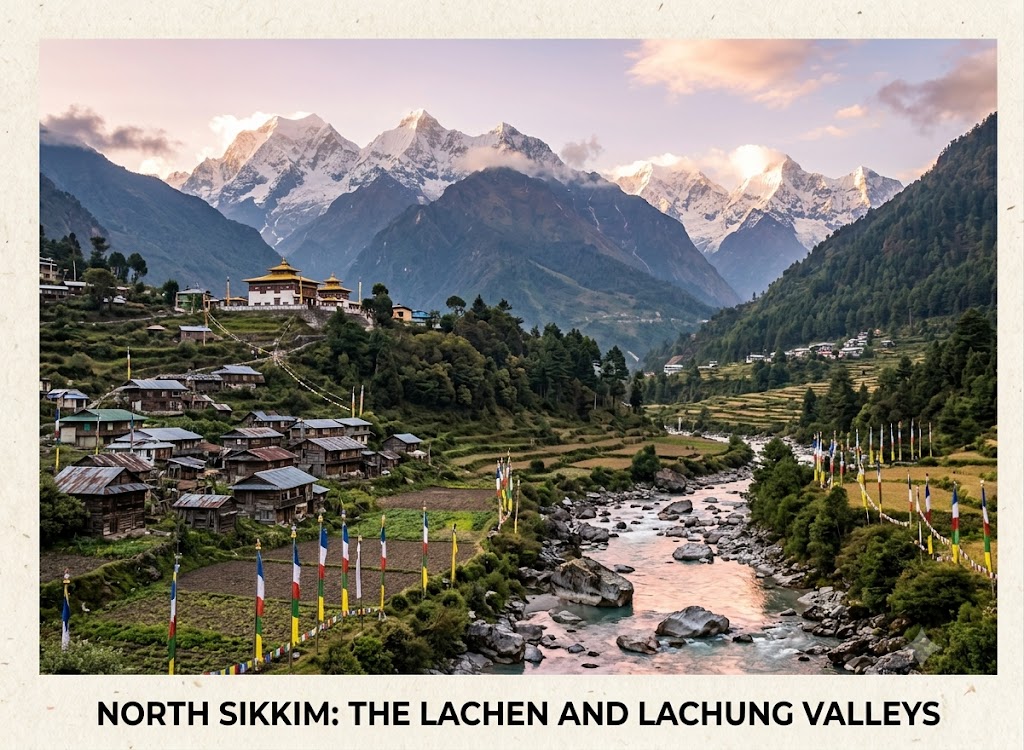
  • Lachen & Lachung Hamlets: Traditional wooden homes, warm Sikkimese homestays, and unique Dzumsa local governance.

*Note: Due to proximity to international frontiers, North Sikkim requires special Protected Area Permits (PAP), arranged by authorized operators like Wander Wish Travels for both Indian and foreign travelers.
Destination Highlights

Best Time to Visit

April to June (Yumthang flower blooms) and October to mid-December (Clear skies & frozen lakes)

Climate

Alpine cold-desert and sub-arctic climate; cool breezy summers and harsh, sub-zero snowy winters.

Max Altitude

17,800 ft (Gurudongmar Lake) / 15,300 ft (Zero Point)

Ideal Duration

3–4 days

Difficulty

Challenging

Famous For

Gurudongmar Lake (17,800 ft), Yumthang Valley of Flowers, Zero Point (Yumesamdong), Hot Sulphur Springs, Chopta Valley, and Lachen & Lachung hamlets.

Weather & Climate

☀️

Summer

8°C – 18°C

❄️

Winter

-15°C – 5°C

Places to Visit

Gurudongmar Lake (17,800 ft)

Gurudongmar Lake (17,800 ft)

One of the highest alpine lakes in the world, sacred to Buddhists and Sikhs. Surrounded by jagged snow peaks, a sacred spot of its crystal-turquoise water remains unfrozen even at -20°C temperatures.
Yumthang Valley (Valley of Flowers)

Yumthang Valley (Valley of Flowers)

A breathtaking Himalayan paradise at 11,800 ft fed by the Lachung River, renowned for blooming rhododendrons in spring, grazing yaks, natural hot sulphur springs, and pine forests.
Zero Point (Yumesamdong at 15,300 ft)

Zero Point (Yumesamdong at 15,300 ft)

The last civilian frontier where motorable roads end close to the Indo-China border, known for perennial snowfields, towering Himalayan glaciers, and dramatic mountain landscapes.
Chopta Valley & Thangu

Chopta Valley & Thangu

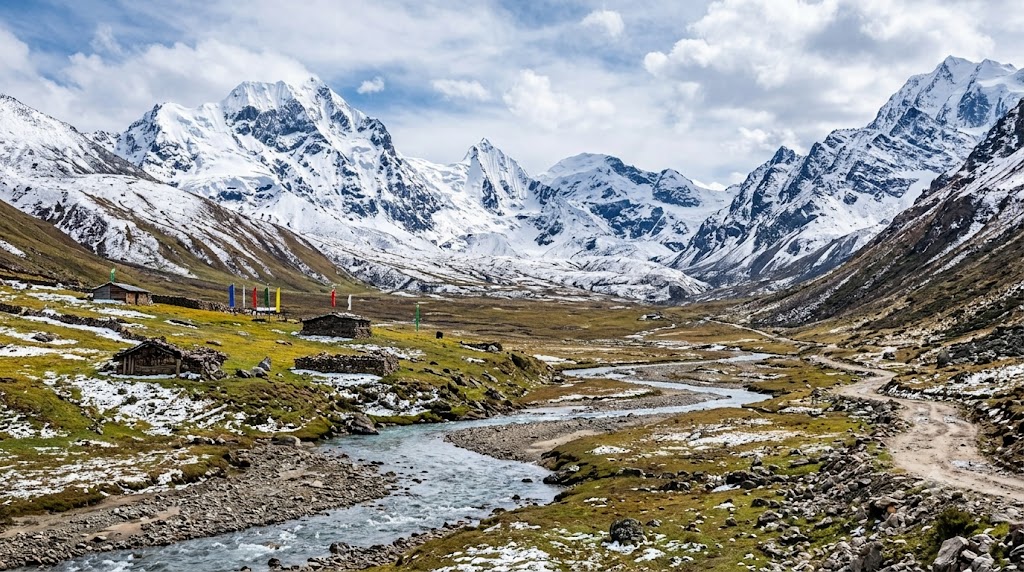
A cold-desert high-altitude valley dotted with meandering alpine streams, alpine flowers in summer, and frozen white wonderland in winter, serving as the gateway to Gurudongmar Lake.
Lachen & Lachung Villages

Lachen & Lachung Villages

Charming, postcard-perfect tribal villages situated at 8,800 ft and 8,600 ft respectively, featuring traditional wooden architecture, apple orchards, authentic mountain homestays, and centuries-old monasteries.
Seven Sisters & Naga Waterfalls

Seven Sisters & Naga Waterfalls

Majestic multi-tiered waterfalls gushing down rugged cliffs along the Gangtok to Chungthang highway, offering picturesque roadside viewpoints and photo spots amidst rainforest greenery.

At a Glance

Best Time

April to June (Yumthang flower blooms) and October to mid-December (Clear skies & frozen lakes)

Ideal Duration

3–4 days

Climate

Alpine cold-desert and sub-arctic climate; cool breezy summers and harsh, sub-zero snowy winters.

Max Altitude

17,800 ft (Gurudongmar Lake) / 15,300 ft (Zero Point)

Plan My Trip
Continue Exploring

Explore Similar Destinations

View All Destinations
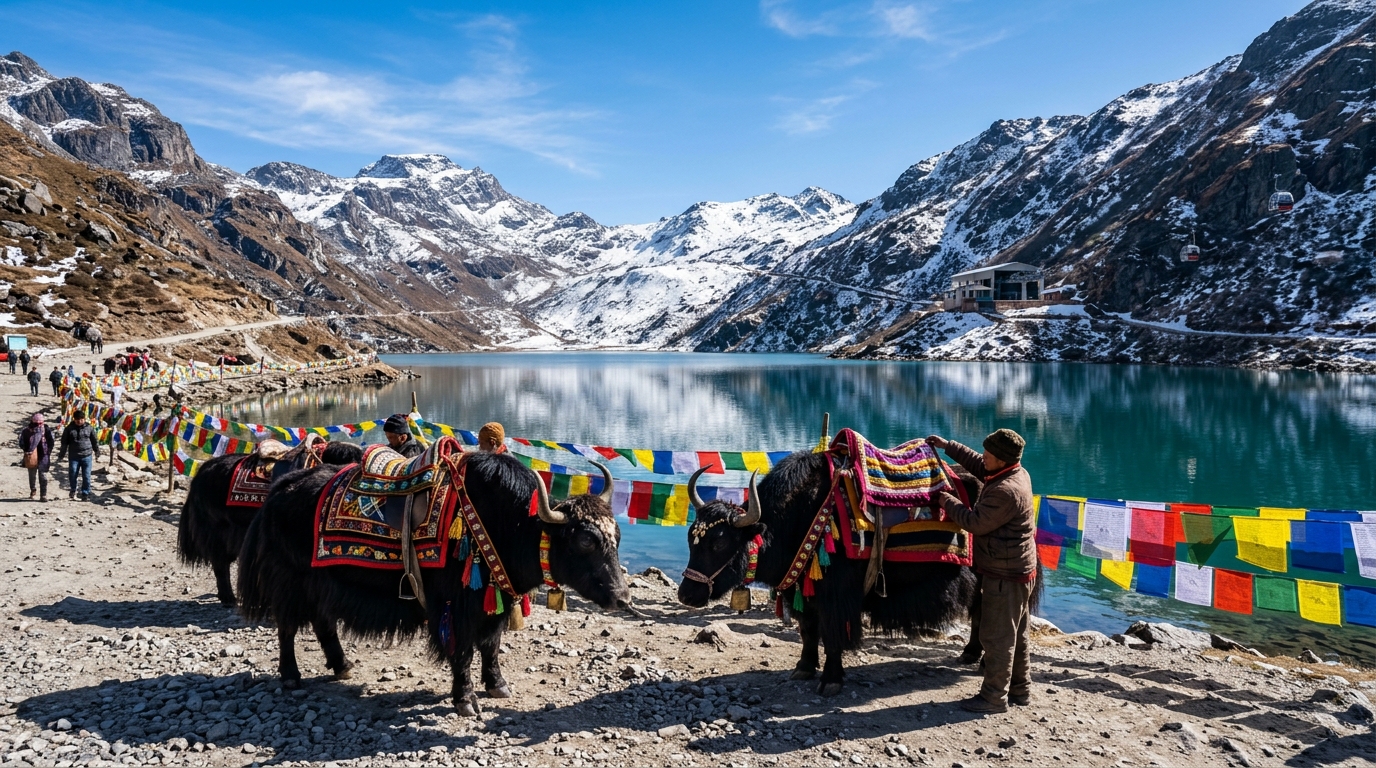
Chnagu Lake
6 Places
1 day Grade: Moderate

Chnagu Lake

Perched at an elevation of 12,400 ft along the ancient Indo-China Silk Route, Tsomgo (Changu) Lake is a sacred, oval-shaped glacial water body renowned for its color-changing waters, fluttering Tibetan prayer flags, and decorated yak rides.

Best Season October to December (Clear reflections & crisp views) and January to April (Snow & frozen lake)
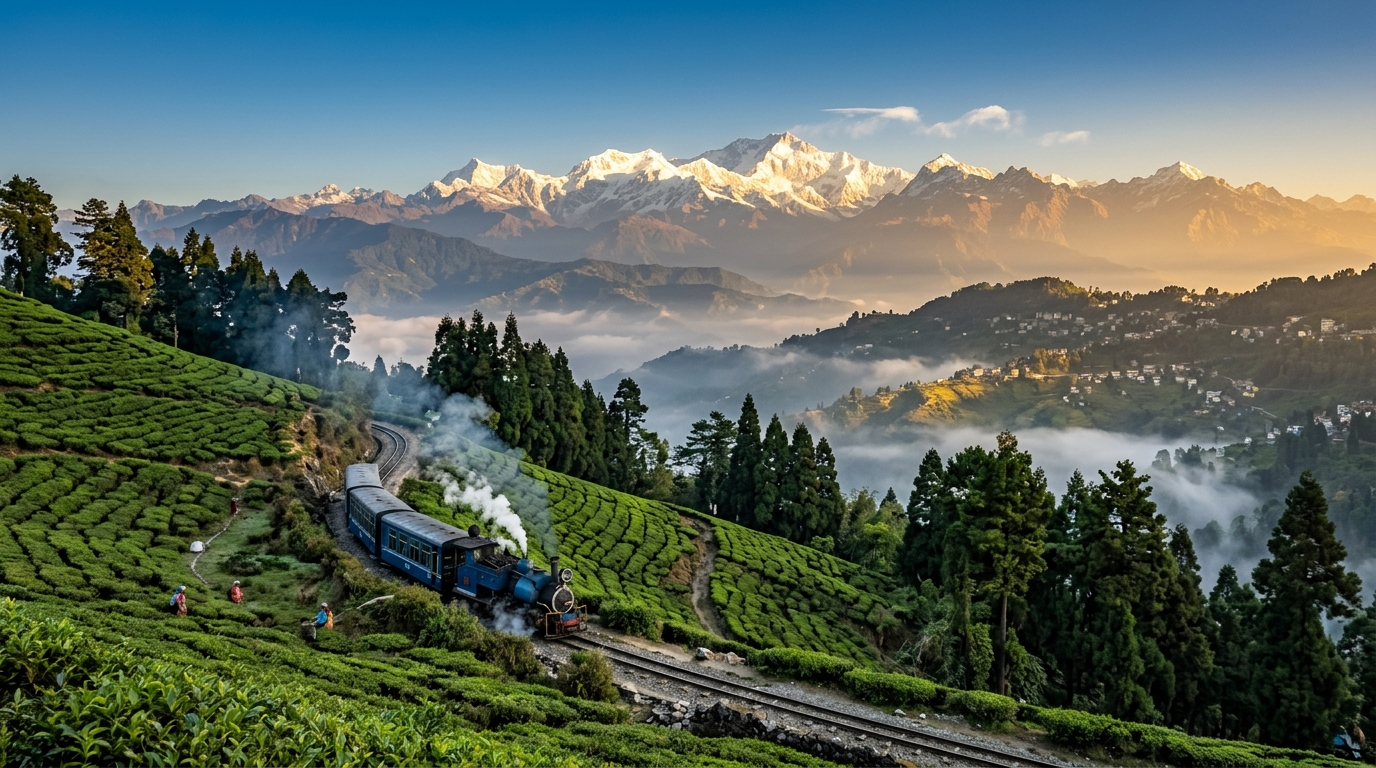
Darjeeling
6 Places
3–4 days Grade: Easy

Darjeeling

Known as the 'Queen of the Hills', Darjeeling is world-famous for its aromatic tea estates, the UNESCO World Heritage Himalayan Toy Train, dramatic sunrises over Mt. Kanchenjunga from Tiger Hill, and charming British colonial heritage.

Best Season October to December (Crystal-clear Kanchenjunga views) and March to May (Pleasant spring weather)
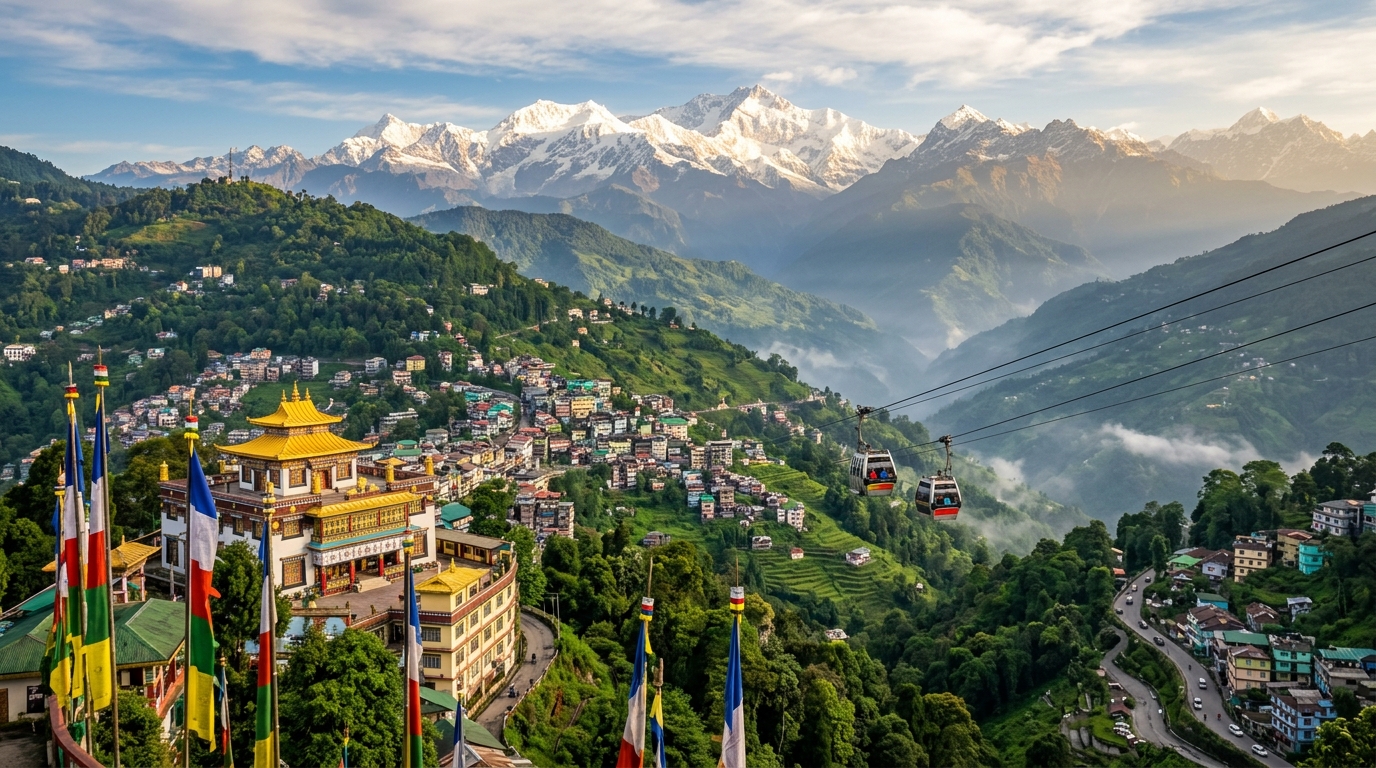
Gangtok
6 Places
5–7 days Grade: Moderate

Gangtok

The gateway to the Eastern Himalayas, Dooars is a lush expanse of evergreen sal forests, undulating tea estates, sparkling mountain streams, and famous wildlife sanctuaries home to the One-Horned Rhinoceros and wild elephants.

Best Season March to May (Spring blooms) & October to mid-December (Clear mountain skies)