Gangtok
Moderate Difficulty

Gangtok

Best Time: March to May (Spring blooms) & October to mid-December (Clear mountain skies)
Ideal: 5–7 days
Max Altitude: 17,800 ft (Gurudongmar Lake) / 8,800 ft (Lachen)
Climate: Alpine and temperate; cool and pleasant summers with cold, snow-laden winters in high passes.

About Gangtok

Derived from the word 'Dwar' (meaning gateway in Bengali, Nepali, and Assamese), Dooars forms the picturesque floodplains and foothill forests of the Eastern Himalayas in North Bengal, leading into Bhutan and Assam. Spanning across the Jalpaiguri, Alipurduar, and Cooch Behar districts, it is one of India's most ecologically diverse wildlife corridors.

🌿 Nature & Wildlife Haven

Dooars is world-famous for its dense tropical forests and protected nature reserves. Gorumara National Park and Jaldapara National Park serve as vital sanctuaries for the endangered Great Indian One-Horned Rhinoceros, Asian Elephants, Royal Bengal Tigers, Indian Bison (Gaur), leopards, and over 350 species of migratory and endemic birds.

🍃 Scenic Rivers & Foothill Escapes

Meandering rivers like the Murti, Teesta, Torsa, Jaldhaka, and Jayanti sculpt the landscape into fertile riverbeds and pebble shores. The foothills of Samsing, Suntalekhola, and Rocky Island offer tranquil homestays amidst whispering pine forests, citrus groves, and emerald-green tea estates established during the colonial era.

✨ Key Highlights of Dooars:

  • Thrilling Safaris: Early morning jeep & elephant safaris across Gorumara, Chilapata, and Jaldapara grasslands.

  • Historic Ruins: Explore the 5th-century Gupta-era ruins of Nalraja Garh and the high-altitude Buxa Fort.

  • Scenic Riverbanks: Relaxation by the pebble beds of the Murti River and white limestone cliffs of Jayanti.

  • Cultural Tapestry: Vibrant interactions with local Toto, Mech, Rava, and Rajbanshi tribal communities.

Whether you seek heart-pounding jungle safaris, bird-watching along riverbanks, or serene evenings amidst fragrant tea plantations, Dooars is the ultimate rejuvenating nature getaway.
Destination Highlights

Best Time to Visit

March to May (Spring blooms) & October to mid-December (Clear mountain skies)

Climate

Alpine and temperate; cool and pleasant summers with cold, snow-laden winters in high passes.

Max Altitude

17,800 ft (Gurudongmar Lake) / 8,800 ft (Lachen)

Ideal Duration

5–7 days

Difficulty

Moderate

Famous For

Mt. Kanchenjunga views, Sacred Glacial Lakes (Tsomgo & Gurudongmar), Buddhist Monasteries, Yumthang Valley of Flowers, and Silk Route.

Weather & Climate

☀️

Summer

12°C – 22°C

❄️

Winter

-5°C – 10°C

Places to Visit

Tsomgo Lake (Changu Lake) & Baba Mandir

Tsomgo Lake (Changu Lake) & Baba Mandir

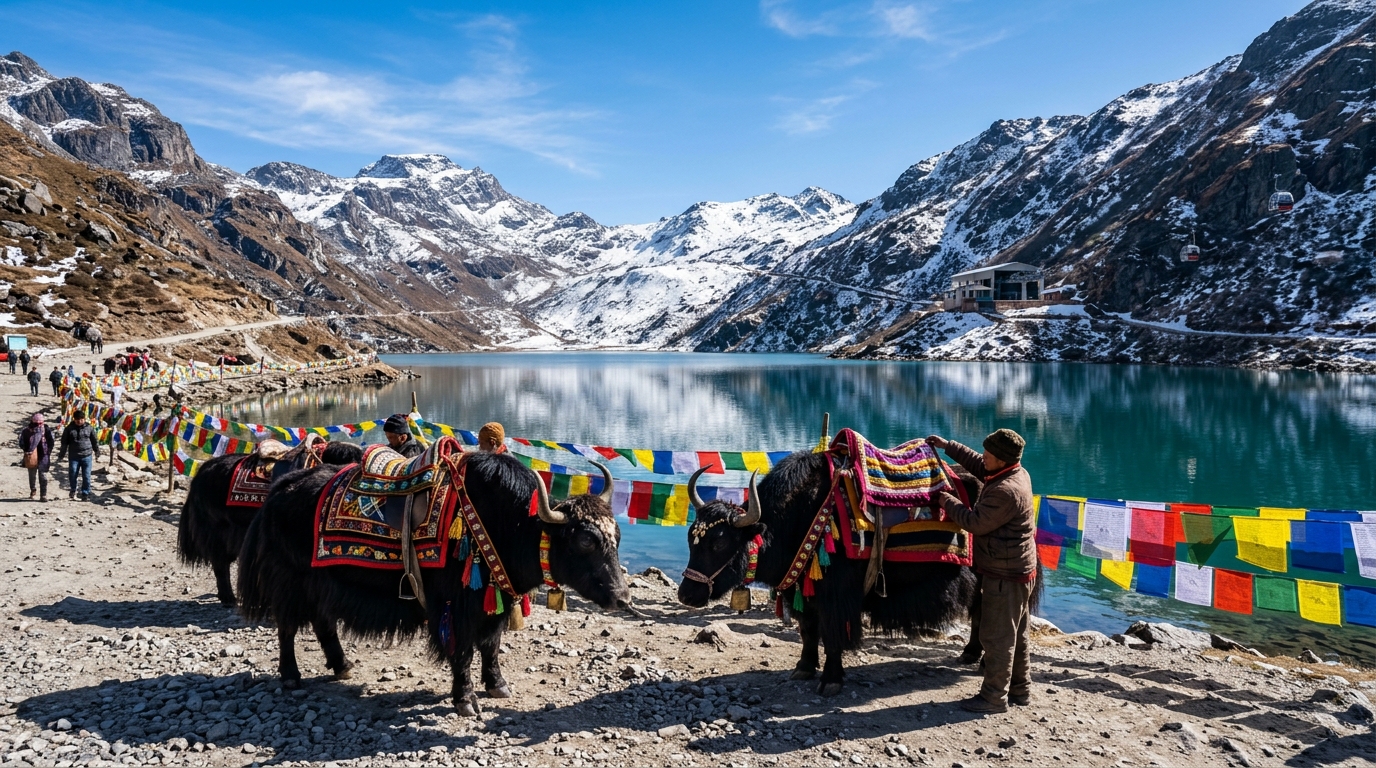
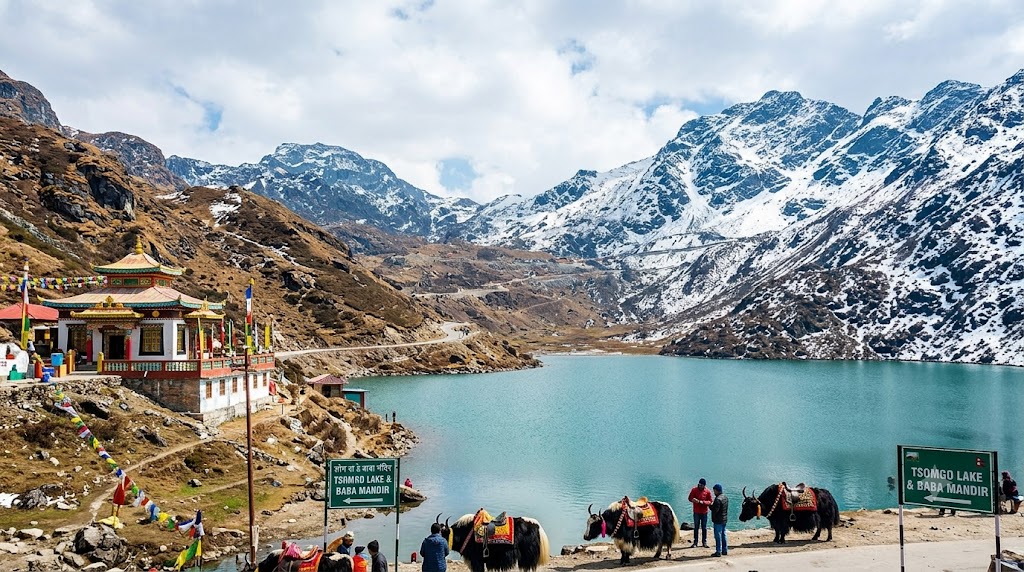
A sacred high-altitude glacial lake at 12,400 ft reflecting snow-clad peaks, surrounded by fluttering prayer flags and decorated yaks. Nearby lies the revered shrine of Baba Harbhajan Singh.
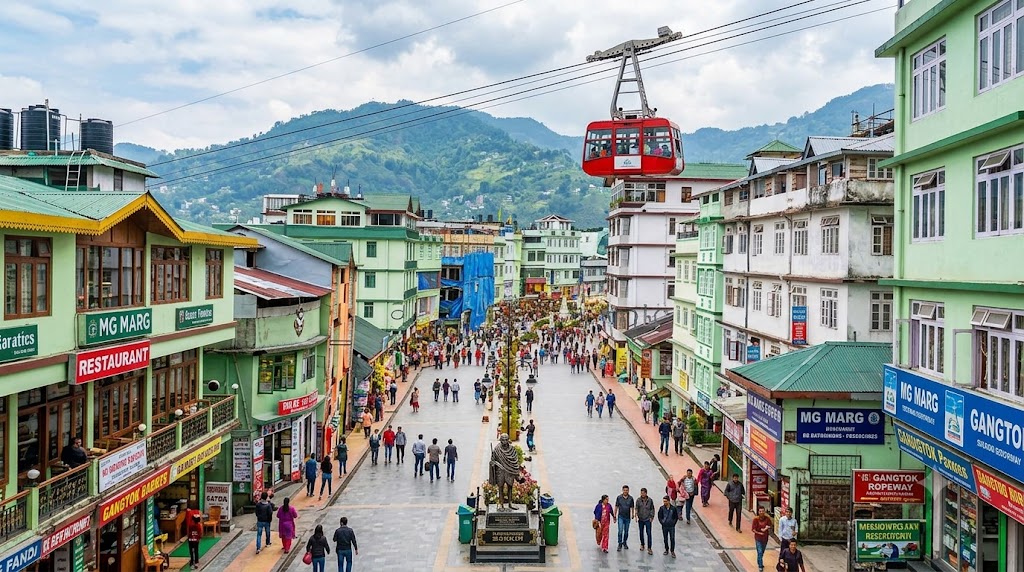
MG Marg & Gangtok Ropeway

MG Marg & Gangtok Ropeway

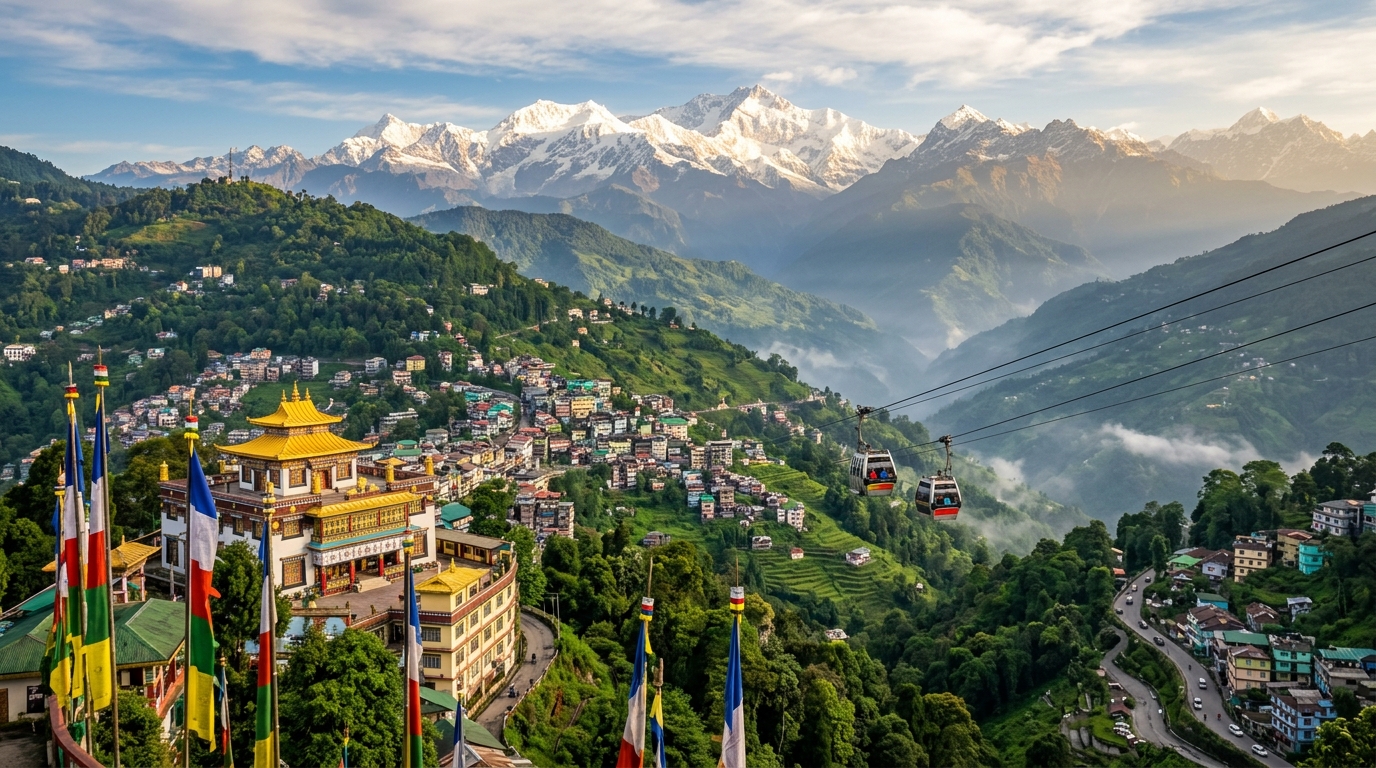
The pedestrian-only heart of Gangtok lined with cafes, souvenir shops, and vibrant flowers. Board the thrilling Gangtok Cable Car for panoramic 360-degree aerial views of the valley and Kanchenjunga.
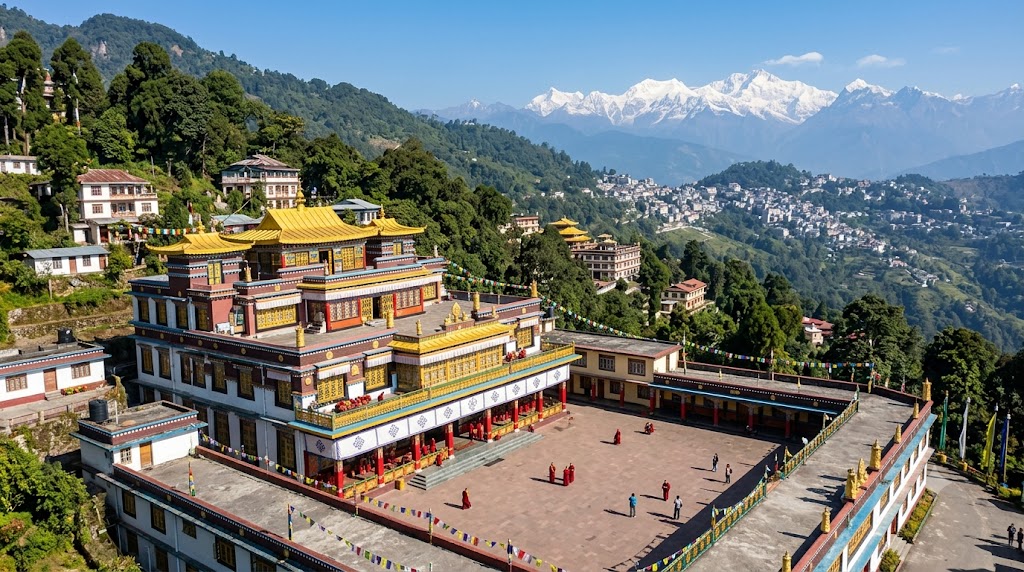
Rumtek Monastery

Rumtek Monastery

Sikkim's largest and most sacred Tibetan Buddhist monastery, perched on a scenic hill opposite Gangtok. Known as the Dharma Chakra Centre, it features magnificent murals, stupas, and golden shrines.
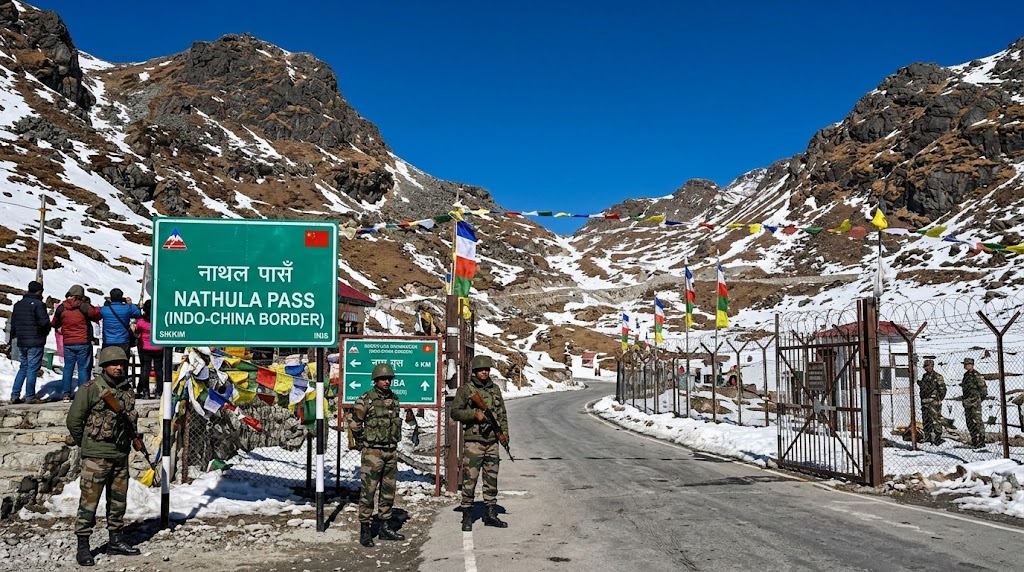
Nathula Pass (Indo-China Border)

Nathula Pass (Indo-China Border)

Located on the ancient Old Silk Route at an altitude of 14,140 ft, this dramatic mountain pass connects India with Tibet (China), offering surreal snow views and historic border checkposts.
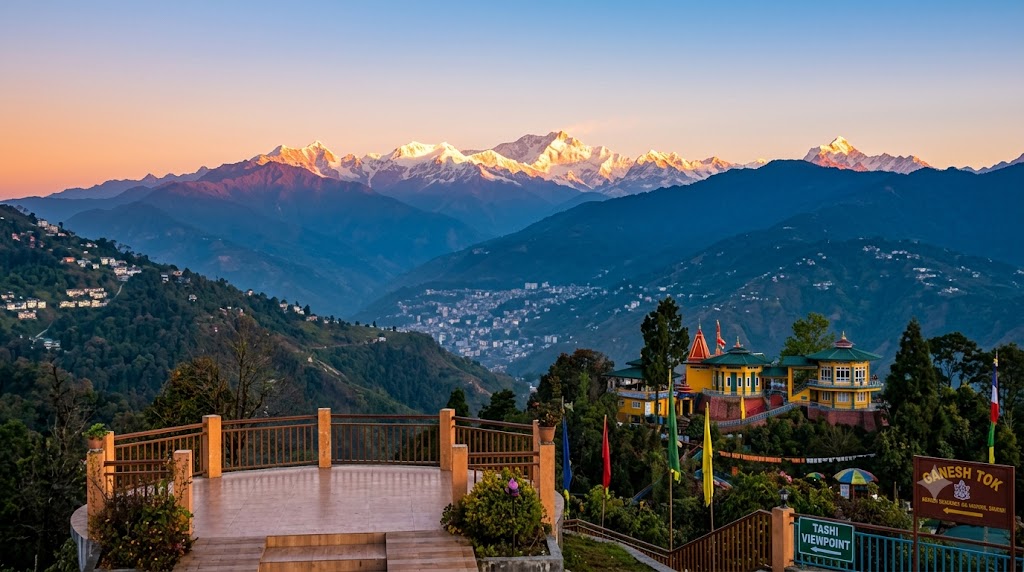
Tashi Viewpoint & Ganesh Tok

Tashi Viewpoint & Ganesh Tok

Iconic vantage points above Gangtok offering sweeping panoramic sunrise views over Mt. Kanchenjunga, Siniolchu peaks, and the sprawling valleys of North and East Sikkim.
Ban Jhakri Falls & Energy Park

Ban Jhakri Falls & Energy Park

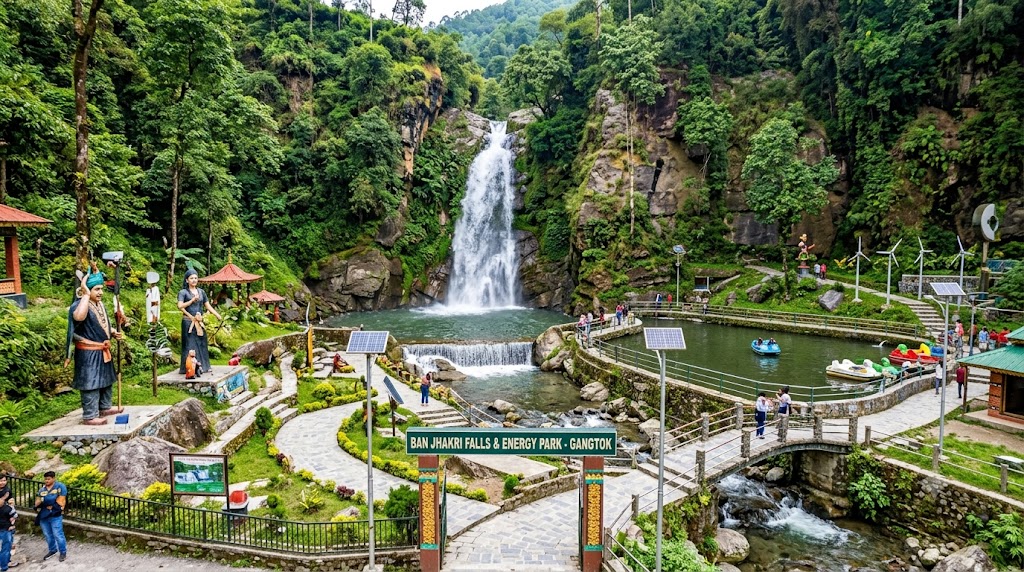
A 100-foot cascading natural waterfall nestled inside a lush forested landscaped park, celebrating the shamanic folklore, sculptures, and traditional culture of the indigenous Lepcha people.

At a Glance

Best Time

March to May (Spring blooms) & October to mid-December (Clear mountain skies)

Ideal Duration

5–7 days

Climate

Alpine and temperate; cool and pleasant summers with cold, snow-laden winters in high passes.

Max Altitude

17,800 ft (Gurudongmar Lake) / 8,800 ft (Lachen)

Plan My Trip
Continue Exploring

Explore Similar Destinations

View All Destinations
North Sikkim
6 Places
3–4 days Grade: Challenging

North Sikkim

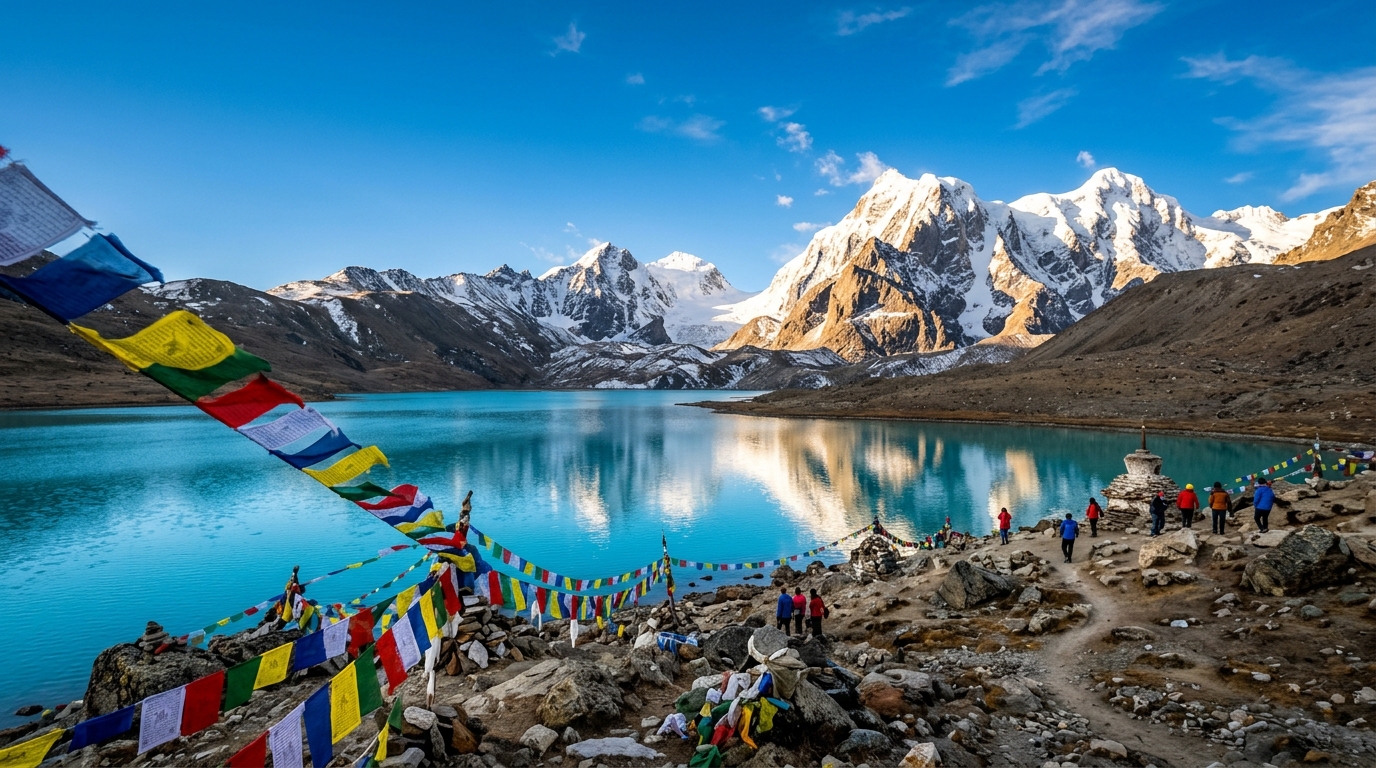
North Sikkim is the rugged crown of the Himalayas—a high-altitude wonderland of sacred turquoise glacial lakes like Gurudongmar (17,800 ft), the blooming Yumthang Valley of Flowers, snow-draped peaks at Zero Point, and traditional wooden hamlets.

Best Season April to June (Yumthang flower blooms) and October to mid-December (Clear skies & frozen lakes)
Chnagu Lake
6 Places
1 day Grade: Moderate

Chnagu Lake

Perched at an elevation of 12,400 ft along the ancient Indo-China Silk Route, Tsomgo (Changu) Lake is a sacred, oval-shaped glacial water body renowned for its color-changing waters, fluttering Tibetan prayer flags, and decorated yak rides.

Best Season October to December (Clear reflections & crisp views) and January to April (Snow & frozen lake)
Bhutan
6 Places
5–7 days Grade: Moderate

Bhutan

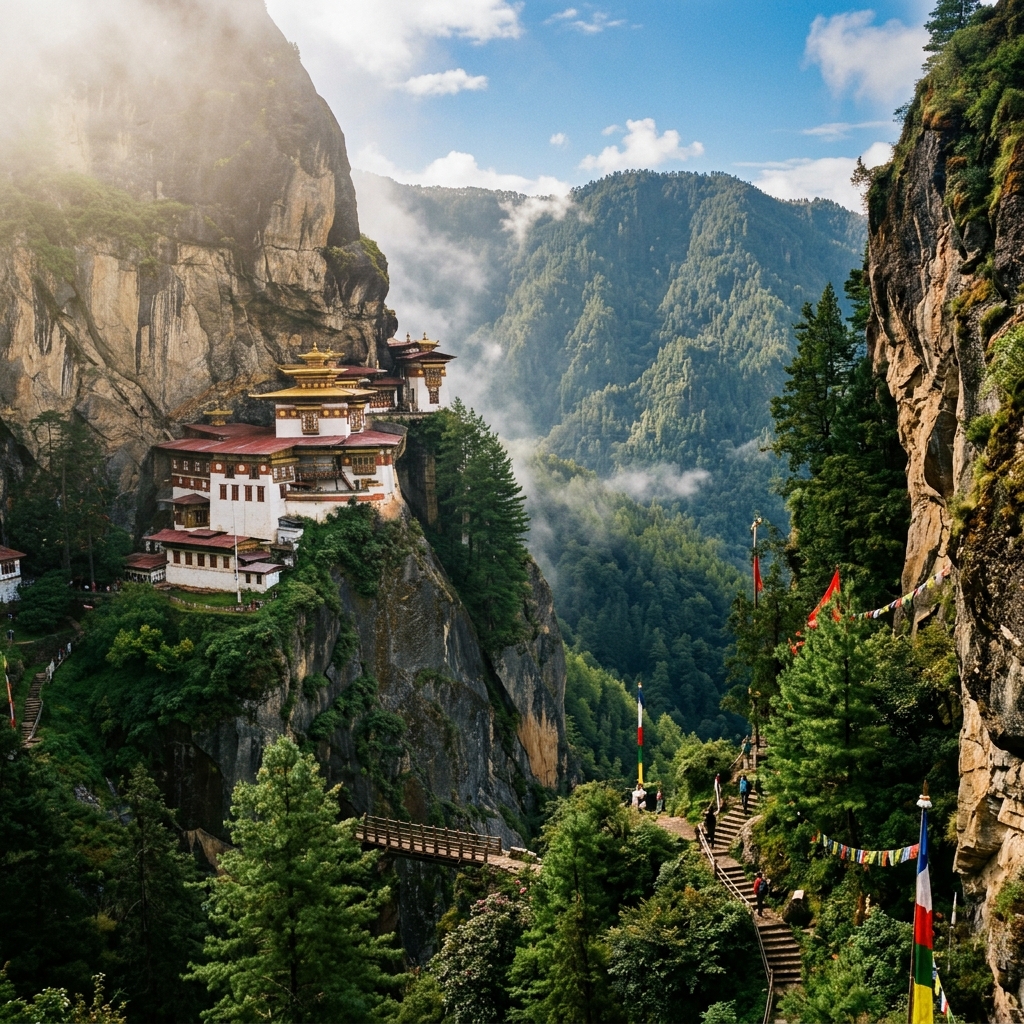
The Kingdom of Bhutan, known as the 'Land of the Thunder Dragon', is a mystical Himalayan realm celebrated for dramatic clifftop monasteries, ancient fortress dzongs, pristine pine valleys, and a philosophy that measures progress through Gross National Happiness.

Best Season September to November (Festivals & clear skies) and March to May (Spring rhododendron blooms)